Fox signs checklist: 12 field clues to identify a garden visitor
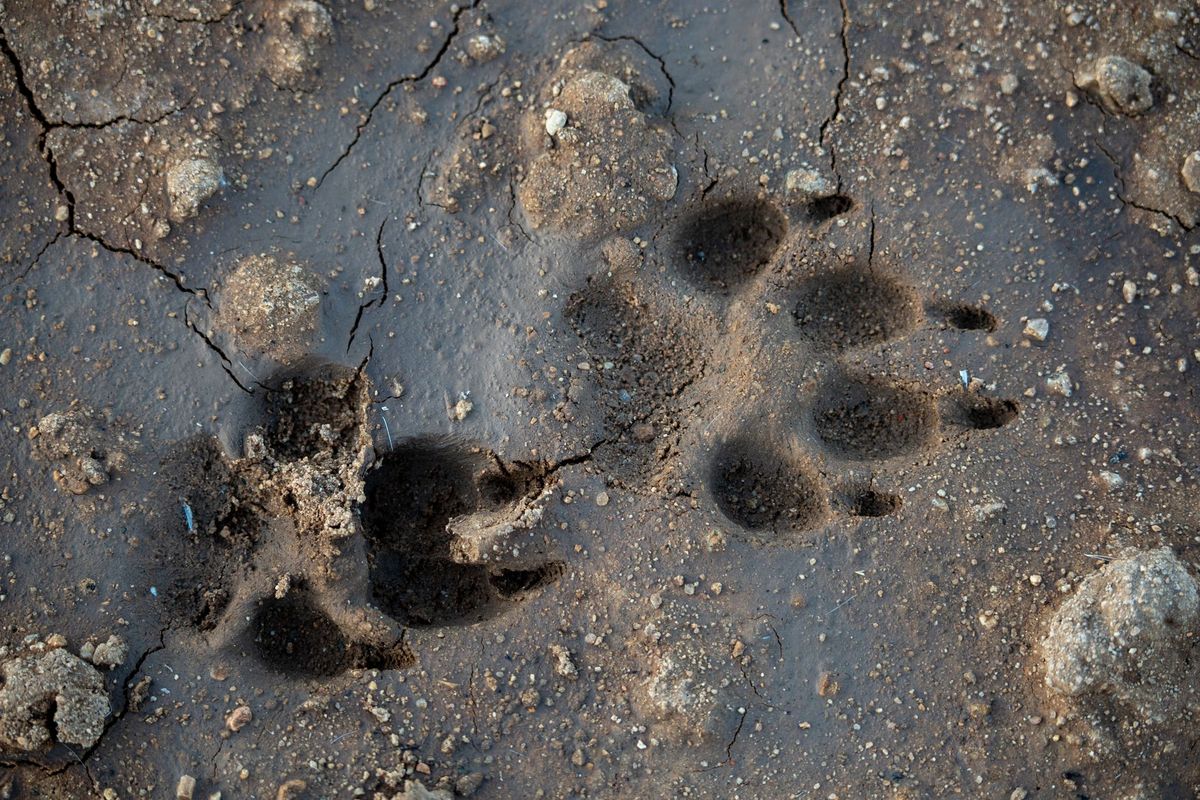
A fox can share a garden with you for months and never let you see it. They move at dusk or in the small hours, stick to the edges, and disappear at the first sound of a latch. What they leave behind is a record, and most of that record survives the night. Twelve signs, checked together, will tell you whether a fox is a regular visitor — and you will not need a camera trap to do it.
Timing beats patience. The best conditions are soft, damp earth after rain, a light frost, or a dusting of snow — anything that holds an impression. Check within a few hours of dawn, before sun and wind blur the edges, because a print in grass is gone by mid-morning in summer.
Start where cover meets open ground: the gap under a side gate, the strip of lawn beside a shed, the worn line along a hedge. Foxes follow the same routes night after night, so a single good print is usually the first of many. Once you find one, keep checking that spot. It is your best chance of confirming not just a fox, but a habit.
Foxes do not hide their droppings; they advertise them. Expect to find them on a path, a flagstone, a log, a tussock, the flat roof of a shed or the top of a wall — somewhere raised or prominent, often at the edge of the territory.
The shape and contents are distinctive: twisted, tapering at one or both ends, dark and firm, and often packed with hair, feather fragments, bone fragments, fruit pips or beetle cases. The smell is musky and sharp, quite different from a dog's.
Handle none of it. Use a bag or gloves, double-bag, put it in the bin, then wash your hands. Fox droppings can carry parasites that matter to people and pets, so keep children and dogs away from any latrine and ask your vet if you are worried about a dog that scavenges.
Smell is the sign most people notice first and trust last. A fox's marking has a musky, faintly skunky edge, strongest in damp corners, under shrubs, around a bin store, or on a gatepost. Because foxes re-mark boundaries regularly, the odour tends to come back after rain or a spell of mild, still weather. It can be surprisingly strong in a small garden.
Alongside the smell, look for physical marks: claw scratches raked down a fence post, a wooden gate or the corner of a deck, and shallow scrapes in soil or leaf litter where a fox has raked with its front feet. Scrapes are often paired with a dropping or a urine mark, which is the fox equivalent of signing on a dotted line.
Foxes eat opportunistically and bury what they cannot finish. A cache looks like a small, neat hole in a lawn or border, sometimes scooped back over, sometimes not. Dig one up carefully — in the morning, with gloves on — and you may find a piece of bread, a bird carcass, an eggshell or a chunk of something a neighbour put out.
Other debris tells the same story: scattered pigeon feathers with no body, chewed footballs, a garden glove carried off and abandoned, fruit stripped from a low branch. If you keep chickens, rabbits or guinea pigs, assume a fox knows where they are and check hutches and runs for weaknesses.
You often hear foxes long before you see one. There are three calls worth learning. The scream is a piercing, almost human-sounding shriek, usually a vixen in winter, and it has sent plenty of people to their windows expecting trouble. The bark is a short, sharp yow-yow-yow, often in threes. The third is harder to describe: a rapid chattering, sometimes written as gekkering, used in confrontations and around the den.
If you hear a scream, a triple bark and a chatter over a few weeks, you are not listening to one animal passing through. You are listening to a territory being held.
Pick a soft patch on a route you suspect — bare soil in a border, the gap under a gate — and rake it smooth, or dust it with a thin layer of fine sand. Check it at first light for three or four mornings and note the direction of travel.
Then look up as well as down: droppings on top of a shed roof or wall are one of the quickest confirmations you will get. In the last hour of daylight, sit quietly downwind of the route, keep still, and watch the hedge line rather than the open lawn. Foxes often appear at the edge of vision before they appear properly in view.
Write down what you find and when
Photo: Víctor C. / Pexels
Previous Post
Urban fox behaviour explained: why UK foxes den under sheds and how to respond
Next Post
Rural foxes versus urban foxes: how diet, territory and timidity differ