Bee hotel vs bee brick: which UK solitary bee nest is right for you?
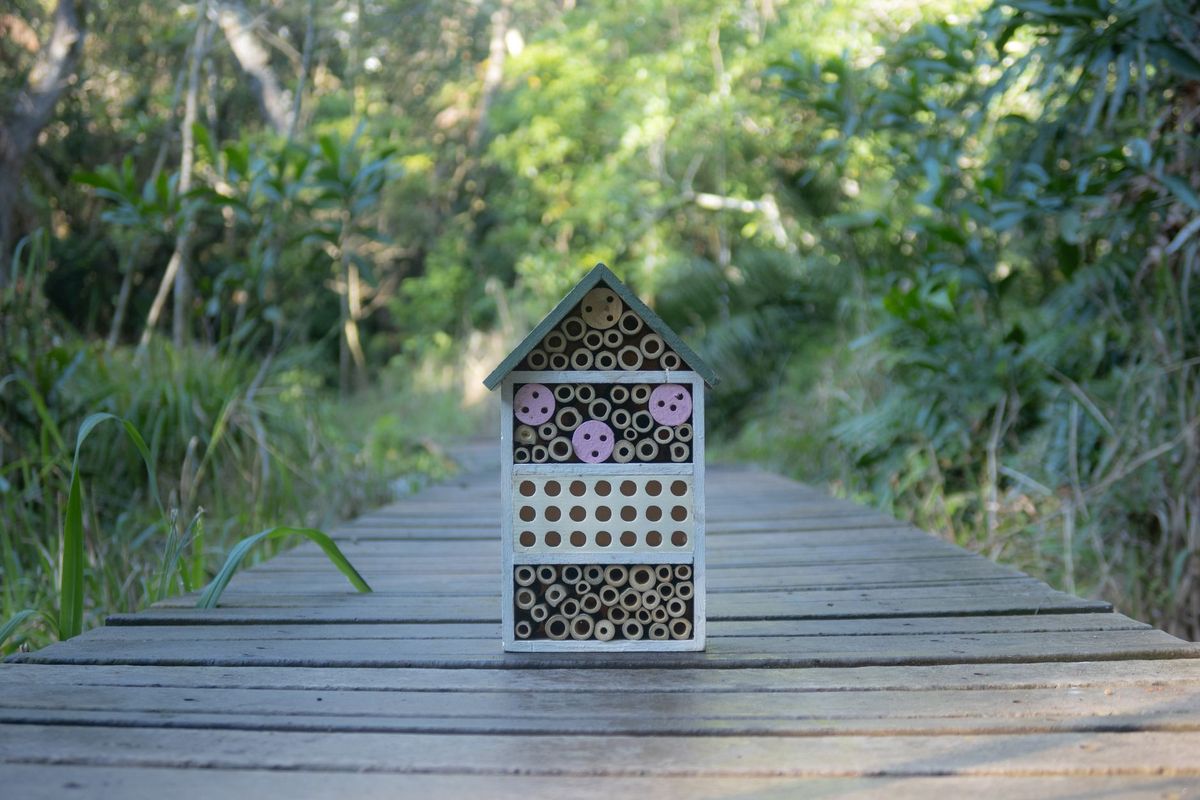
Most of the UK's bees are solitary. They do not live in a colony, they do not make honey, and they have no hive to defend. A female red mason bee spends her spring finding a hollow stem, packing it with pollen and eggs, sealing each cell with mud, and then dying. Give her the right cavity in the right place and she needs nothing else from you. That is the whole promise of a bee hotel and a bee brick — and it is also where the two start to behave very differently.
A bee hotel is a box of nesting cavities: bamboo canes, cardboard tubes, drilled wooden blocks, or a stack of grooved boards. It hangs on a wall, fence or shed, and you can take it down, move it, open it and inspect it. Quality varies enormously. The good ones have cavities you can pull out and replace each year. The bad ones are glued bundles of split bamboo with no way in and no way to clean.
A bee brick is a masonry block with a handful of tunnels moulded through it, designed to be built into a wall as the wall goes up. Some local authorities now ask for them on new buildings, and they suit anyone who wants a nesting site that will still be there in twenty years with no fuss. The trade-offs are fixed orientation, fixed cavity sizes, and almost no access once the thing is mortared in place.
A basic hotel costs very little; a well-made one with replaceable tubes costs more, but still less than most garden tools. Bee bricks are dearer per unit because they are cast concrete or fired clay. If you retrofit one into an existing wall, you will pay a bricklayer far more than you paid for the brick itself. Built into a new garden wall, extension or shed base, the extra cost is modest and the result is permanent.
The real difference is effort over time. Hotels ask something of you every year or two, and that is not a flaw — it is the point. Bricks ask nothing at all, which is convenient but means debris, parasites and damp can quietly build up inside cavities you cannot reach.
This is the decision that matters most, and it is where hotels win on flexibility. Both options need the same conditions: a warm, sheltered spot in sun for much of the day, ideally facing south or south-east so the bees get morning warmth. Mount a hotel around 1.5 metres off the ground, under the eaves if you can, so driving rain does not soak the entrances. Keep it away from bird feeders and from dense shrubbery where tits and woodpeckers will pick off emerging bees.
A brick is stuck with whatever wall it is in. A north-facing gable end or a wall shaded by a neighbour's conifer will stay cold, and a cavity that never warms up is a cavity that stays empty. If your only brick-friendly wall faces north, choose a hotel instead and put it somewhere better.
Solitary bee nests are not maintenance-free, whatever the packaging says. Plan on the following:
Some gardeners move the whole hotel into an unheated shed or garage over winter to keep it dry, then bring it out again in early spring before the mason bees emerge. It is worth trying if your site is exposed.
Cheap nests cause real harm, and the faults are easy to spot once you know them. Splinters in drilled softwood tear delicate wings. Glued bamboo traps moisture and cannot be cleaned. Glass and plastic tubes collect condensation, which grows mould on the pollen stores. Varnished, painted or treated wood can put bees off altogether, and entrances sealed with mesh do the same job of keeping everything out.
Cavity size matters too. Most garden solitary bees want holes roughly 4–10mm across and at least 100mm deep. Shallow cavities tend to produce a queue of male offspring, because the female eggs go at the back. A bee brick's moulded tunnels are usually sensibly sized, but check the depth before you buy, and avoid any block with holes under 4mm — nothing useful can nest in them.
Choose a bee brick if you are building or repointing a wall on a sunny elevation, you want something permanent and unobtrusive, and you are happy to accept that you cannot manage it. Choose a bee hotel if you rent, garden on a balcony, want to watch what is happening, or need the freedom to move the nest when the conditions are wrong. If you have a suitable wall and a sunny fence, there is no harm in having both: different species use different cavity sizes, and a varied offering brings in leafcutter bees as well as mason bees.
Neither option will fix a garden with nothing in flower, so plant first and install second. Do that, and a small box of tubes on a sunny wall will quietly fill up with life within a season or two.
Photo: Magda Ehlers / Pexels
Previous Post
Common mistakes in bee gardens: 10 planting errors and their fixes
Next Post
How to build a small wildlife pond for foxes, bees and amphibians