Beginner's guide to British bumblebees: identify the seven common garden species
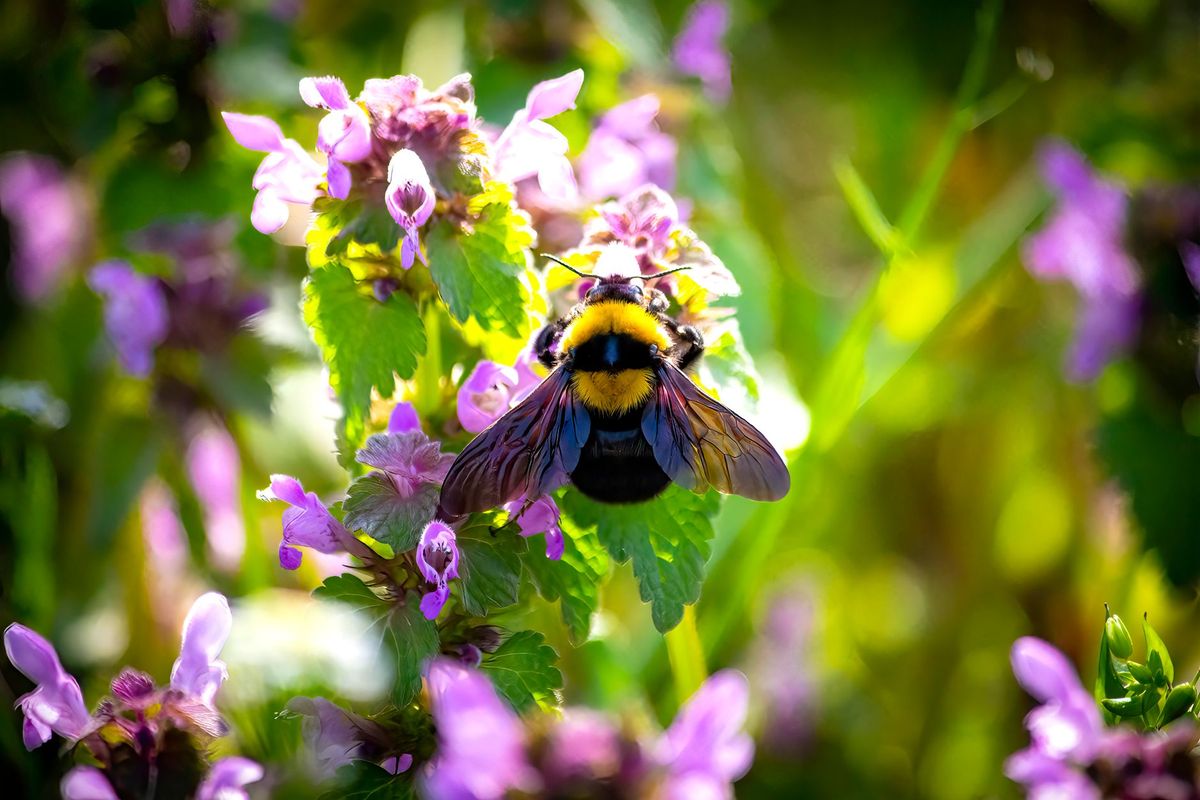
A bumblebee lands on a lavender spike, hugs the flower, and buzzes so loudly you can hear it from a metre away. It is one of the most rewarding garden insects to watch, and you can identify the common species without catching them. The trick is to look at three things: the colour bands on the body, the colour of the tail, and the way the bee behaves. This guide covers the seven bumblebees you are most likely to meet in a British garden, from the giant buff-tailed queen in March to the ginger carder bee still working the asters in September.
Colour bands are the yellow, black, white or ginger patches on a bumblebee’s body. The tail is the fluffy tip of the abdomen, and it is often the quickest clue. Size matters too, but remember that queens are much larger than workers of the same species.
Large and unmistakable when you see a queen: black with two yellow bands and a buff or peach-coloured tail. Workers are smaller and their tails can look white, which causes most beginner confusion. Buff-tailed bumblebees nest underground, often in old mouse holes or under sheds. They love lavender, borage, clover and daisies, and queens appear very early in spring.
Almost identical to the buff-tailed bumblebee, but the tail is bright white and the yellow bands are often a cleaner lemon. Queens are large and fly from early spring. They also nest underground. If the tail has any warm buff tinge, lean towards buff-tailed; if it is snowy white, white-tailed is likely.
Mostly black with a vivid red or orange tail. Queens are big and bold; workers are smaller versions. Males have yellow facial hair and often a yellow band on the thorax. They nest in holes in walls, under stones and in dry grass. In gardens they visit thistles, knapweed, lavender and daisies.
Small, fluffy and quick. Look for a yellow collar, often a second yellow band on the abdomen, and an orange-red tail. Queens emerge early and often nest in bird boxes or holes in trees. This is a common garden bee in spring, especially around fruit blossom and flowering currant.
A long face and a long tongue make this species a specialist at deep flowers such as foxgloves, honeysuckle, snapdragons and comfrey. It is black with three yellow bands and a white tail. It nests underground or in bird boxes and is a familiar sight in British gardens through summer.
Entirely ginger-brown and fluffy, with no clear colour bands. The tail is the same warm ginger, sometimes faded. Carder bees comb moss and grass together for their nest, often on the ground. They have a long tongue and visit lavender, sage, comfrey and runner beans.
A relative newcomer that has spread quickly. It has a ginger-brown thorax, a black abdomen and a white tail. Tree bumblebees often nest in bird boxes, roof eaves and holes in trees. They appear early, can be very abundant, and males sometimes hover in a small cloud outside the nest.
Bumblebees do not all follow the same calendar. Queens overwinter alone and emerge at different times, then start a nest and raise workers. By late summer, new queens and males appear. The new queens mate, feed up and find a place to sleep through winter.
You may also spot cuckoo bumblebees, which do not collect pollen and often have darker wings. They are fascinating, but they are not covered here. For beginners, the seven species above are the ones to learn first.
Bumblebees need nectar and pollen from early spring to late autumn. Plant in generous clumps rather than single plants, because bees find larger patches more easily. Good choices include hellebore, mahonia and willow for early queens; lavender, comfrey, borage, salvia, thyme and marjoram in summer; and knapweed, thistle, asters and sedum for late workers and new queens.
Nest sites matter just as much. Leave a patch of long grass, a log pile or a dry bank undisturbed. A bird box with a small entrance can attract tree bumblebees. Avoid pesticides, and if you must use them, follow the label carefully and keep them away from flowers in bloom. A shallow dish of water with stones for landing helps on hot days.
Choose a warm, still day and find a sunny patch of flowers. Sit close, stay still and pick one bee. Note its tail, its bands, its size and the plant it is visiting. Do this for ten minutes and you will learn more than from an hour of reading. Soon the buff-tailed queens, the tiny early bumblebees and the ginger carder bees will stop being anonymous. You do not need to handle them; watching is enough.
Photo: Aykut Özen / Pexels
Previous Post
Rural foxes versus urban foxes: how diet, territory and timidity differ
Next Post
How to plant a bee-friendly window box on a UK balcony or sill